

PRODUCTS
Oasis Iceberg
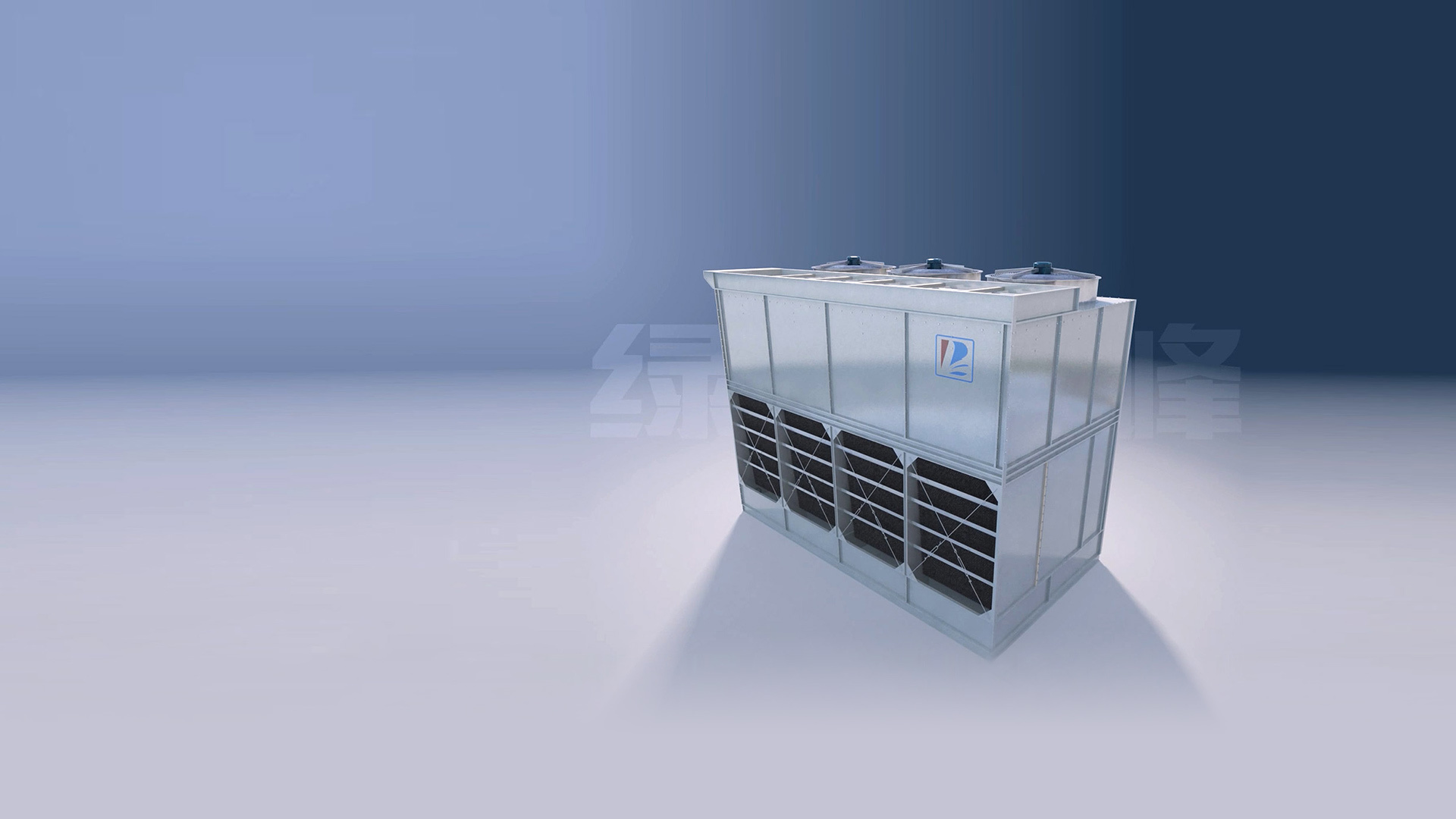
Evaporative condenser, is commonly known as a name, also known as closed cooling tower. In fact, it is also known as closed cooling tower, the use of evaporation of spray water, brought out of the tower by the air, for cooling the circulating medium in the heat transfer tubes, the circulating medium is completely isolated from the outside world. Because the circulating medium being cooled is isolated from the outside world, completely closed, sometimes called evaporative condenser. Internal circulating medium, only cooling, no consumption without evaporation. As the heat exchanger tube outside the spray water vaporization, a large amount of water vapor and air mixing, humidity increases, by the axial fan, these saturated, high humidity, high enthalpy air out of the tower in the environment.
Air-cooled heat exchanger, referred to as air-cooler, is the ambient air as a cooling medium, the fan forced air swept across the finned tube outside, so that the high temperature process medium inside the tube for cooling industrial heat exchange devices. The air cooler consists of three basic parts: tube bundle, fan and frame, and auxiliary parts such as shutter and platform ladder.
Counterflow closed cooling tower
Counterflow closed cooling tower is named for the opposite direction of refrigerant and heat medium. The spray water is sprayed from top to bottom, and the air passes through at high speed from bottom to top. It is mainly composed of heat exchange coil, spray water system, air extraction system, frame shell.
Single air inlet combined flow closed cooling tower
Compound closed-circuit cooling towers, sometimes referred to as compound closed towers, are named for the mixing of spray water and hot air. The spray water flows from top to bottom, and the air is divided into two paths: one part of the cold air flows from top to bottom, and the other part enters horizontally from the side, exchanging heat with the falling spray water through the packing to reduce the temperature of the spray water.
Double-flow closed-circuit cooling tower
The spray water and wind direction form a compound form, with the wind being divided into two streams: one stream of cold air enters vertically from the top, and the other stream enters horizontally from the side. These streams cross and exchange heat with the falling spray water through the packing material, lowering the spray water temperature. Water droplets carried by the airflow are blocked by the side water collector and drip into the lower tank for recycling and reuse. Due to the thorough mixing of the spray water and cold air, the cooling and temperature reduction are significant, bringing the temperature closer to the wet-bulb temperature.
Crossflow closed cooling tower
Crossflow closed-circuit cooling tower, named for the horizontal direction of the spray water and hot air. The spray water flows from top to bottom, and the air enters horizontally from the side, passing through the heat exchanger coils. It exchanges heat with the falling spray water, lowering the spray water temperature. It mainly consists of heat exchanger coils, a spray water system, a draft system, and a frame shell.
Dry-Wet Combined Closed Cooling Tower
A dry–wet combined closed-circuit cooling tower, often simply referred to as a “dry–wet” or “dry–wet hybrid” system, integrates both dry and wet heat-exchange coils to leverage the advantages of each. The dry coil takes advantage of lower ambient temperatures to reduce the temperature of the process fluid to near the dry-bulb temperature, consuming only the kinetic energy required to drive air flow and incurring no water consumption. Meanwhile, the wet coil further cools the fluid to a temperature close to the wet-bulb temperature, thereby compensating for the dry coil’s limitation in achieving wet-bulb temperatures. As a result, this design significantly conserves water resources and has gained widespread favor among users.
An evaporative air cooler utilizes the evaporation of sprayed water, with the resulting vapor carried away by the air to the outside of the tower, thereby cooling and exchanging heat with the circulating medium inside the heat exchange tubes. The circulating medium is completely isolated from the external environment. As the sprayed water vaporizes, a large amount of water vapor mixes with the air, increasing its humidity; therefore, powerful exhaust ventilation equipment—namely, fans—is required to remove this saturated, high-humidity, high-enthalpy air from the tower. On the surface, it appears that the air is being cooled while simultaneously undergoing evaporative cooling from the sprayed water; hence the name “evaporative air cooler,” which is sometimes also referred to as an “evaporative cooler.”
An evaporative condenser is a common, informal term for a closed-circuit cooling tower. In fact, it is precisely a closed-circuit cooling tower: it uses the evaporation of sprayed water, carried away by air outside the tower, to cool and exchange heat with the circulating medium inside the heat-exchange tubes. The circulating medium remains completely isolated from the external environment. Because the circulating medium being cooled is entirely sealed off from the outside world, it is sometimes referred to as an evaporative condenser. The internal circulating medium is only cooled—there is no consumption or evaporation. After the spray water on the exterior of the heat-exchange tubes vaporizes, a large amount of water vapor mixes with the air, increasing the humidity. An axial-flow fan then draws this saturated, high-humidity, high-enthalpy air out of the tower and into the surrounding environment.
An air-cooled heat exchanger, often referred to as an air cooler, is an industrial heat exchange device that uses ambient air as the cooling medium. A fan forces air to flow across the outer surface of finned tubes, thereby cooling the high-temperature process fluid inside the tubes. An air cooler consists of three basic components: the tube bundle, the fan, and the supporting frame, as well as auxiliary components such as louvers and platform ladders.



Oasis Bingfeng Fluid Equipment Co.,Ltd
Contact Phone:+86 4000 616 676
Fax:+86 0310 3178005
E-mail:sales@hdbingfeng.com
Contact Address:No.1, Happiness Road, Feixiang Economic Development Zone, Handan City, Hebei Province
Copyright©2024 Oasis Bingfeng fluid equipment co., ltd