

Evaporative air cooler
An evaporative air cooler utilizes the evaporation of sprayed water, with the resulting vapor carried away by the air to the outside of the tower, thereby cooling and exchanging heat with the circulating medium inside the heat exchange tubes. The circulating medium is completely isolated from the external environment. As the sprayed water vaporizes, a large amount of water vapor mixes with the air, increasing its humidity; therefore, powerful exhaust ventilation equipment—namely, fans—is required to remove this saturated, high-humidity, high-enthalpy air from the tower. On the surface, it appears that the air is being cooled while simultaneously undergoing evaporative cooling from the sprayed water; hence the name “evaporative air cooler,” which is sometimes also referred to as an “evaporative cooler.”
Key words:
Evaporative air cooler
Classification:
Hotline:
Evaporative air cooler
Overview
An evaporative air cooler utilizes the evaporation of sprayed water, with the resulting vapor carried away by the air to the outside of the tower, thereby cooling and exchanging heat with the circulating medium inside the heat exchange tubes. The circulating medium is completely isolated from the external environment.
After the spray water vaporizes, a large volume of water vapor mixes with the air, increasing the humidity. Therefore, a powerful exhaust ventilation system—namely, a fan—is required to remove this saturated, highly humid, high-enthalpy air from the tower. On the surface, it appears that the air is cooled while the spray water evaporates; such equipment is commonly referred to as an evaporative air cooler, or sometimes simply an evaporative cooler.
Working Principle
► Latent heat of vaporization: Similar to that of a closed-circuit cooling tower, it relies on the evaporation of spray water on the exterior of the heat exchange tubes to absorb latent heat of vaporization, thereby removing thermal energy from the industrial circulating water within the closed heat exchange tubes.
► Partitioned heat exchange: the spray water and air are completely isolated from the circulating medium, with no direct contact—only heat transfer occurs, with no physical contact.
Key Advantages
► No evaporation: cooling only, with no evaporation and no consumption. The circulating medium is completely isolated from the external air, with no direct contact whatsoever, eliminating medium evaporation, consumption, and the ingress of impurities, thereby ensuring the stability of the internal medium composition.
► No scaling: Since there is no evaporation, the concentrations of scaling ions such as calcium, magnesium, and sulfate in the medium remain unchanged, thus preventing scale formation.
► Easy maintenance: All coil sections are fully visible, making maintenance convenient and inspections straightforward.
► The equipment features air intake on all four sides, resulting in low airflow resistance and reduced fan power consumption.
Application Scenarios
It is predominantly used in heavy industries such as iron and steel metallurgy, casting and smelting, petrochemicals, chemical and textile manufacturing, and machinery and power generation. It exhibits excellent resistance to scaling, reduces evaporation, and is commonly employed for cooling desalinated water and ultrapure water. The cooling process takes place within closed heat-exchanger tubes, completely isolated from the external atmosphere.
► Iron and steel metallurgy: blast furnaces, continuous casting and rolling, crystallizers, air compressors, etc.;
► Large-scale casting: melting furnaces, variable-frequency drives, quenching fluids, etc.;
► Petroleum refining: reactors, smelting furnaces, heat exchangers, etc.;
► Chemical and Textile Industries: Reactors, etc.;
► Air conditioning cooling: compressor, etc.;
Brand Advantages
Dedicated for 21 years—our focus breeds expertise, delivering extensive experience and uncompromising quality.
21 patents, backed by robust patent protection, ensure reliable technology, excellent performance, and stable operation.
Spanning 40 mu of land, with strong financial backing and a robust support network, we offer long-term partnerships and worry-free after-sales service.
Case
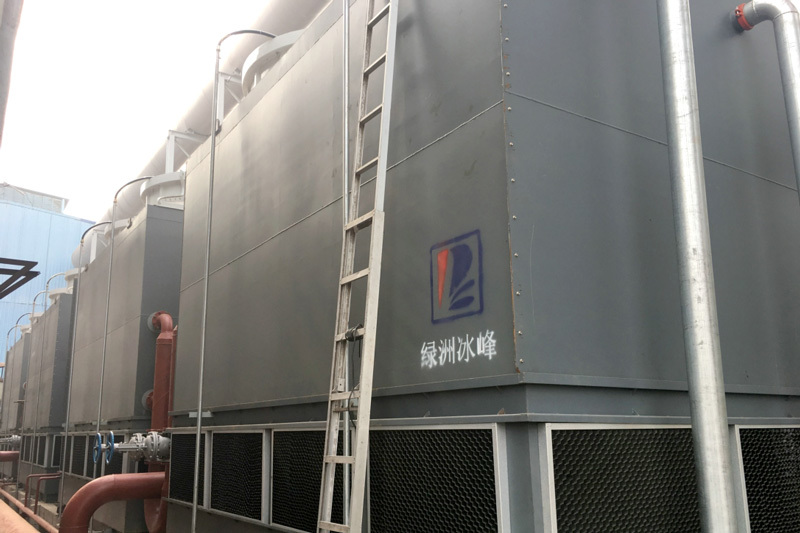
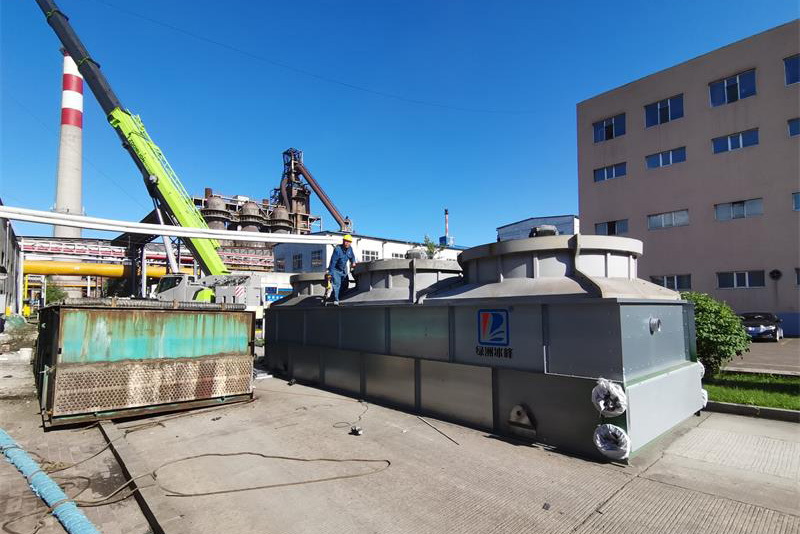
Due to their application in industries such as iron and steel metallurgy, chemical and light textile manufacturing, and petroleum refining, these units typically have flow rates of 500 m³/h or more and are generally quite large in overall dimensions. All are custom-designed products, tailored to specific transportation constraints, site conditions, and process parameters; no standardized specifications exist.
Add Sales Engineer Enterprise WeChat: Get Technical Copywriting for Free
Related Products
Leave us a message



Oasis Bingfeng Fluid Equipment Co.,Ltd
Contact Phone:+86 4000 616 676
Fax:+86 0310 3178005
E-mail:sales@hdbingfeng.com
Contact Address:No.1, Happiness Road, Feixiang Economic Development Zone, Handan City, Hebei Province
Copyright©2024 Oasis Bingfeng fluid equipment co., ltd