


NEWS CENTER
Oasis Iceberg
17
2025
-
02
What is an evaporative condenser?
An evaporative condenser is a highly efficient heat exchange device that combines the advantages of water cooling and air cooling.
Evaporative condensers are highly efficient heat exchange devices that combine the advantages of water cooling and air cooling. Their operating principle is as follows:
1. Main Components
Heat exchange coils Refrigerant flows within, undergoing a phase change from gas to liquid.
Spray system Water is sprayed evenly onto the coil surface.
Fan Forces air flow, accelerating evaporation and expelling moist air.
Water pump Circulates water from the tank to the spray system.
Water tank Stores and collects circulating water.
Water baffle Prevents unevaporated water droplets from being carried away by the air, reducing water consumption. 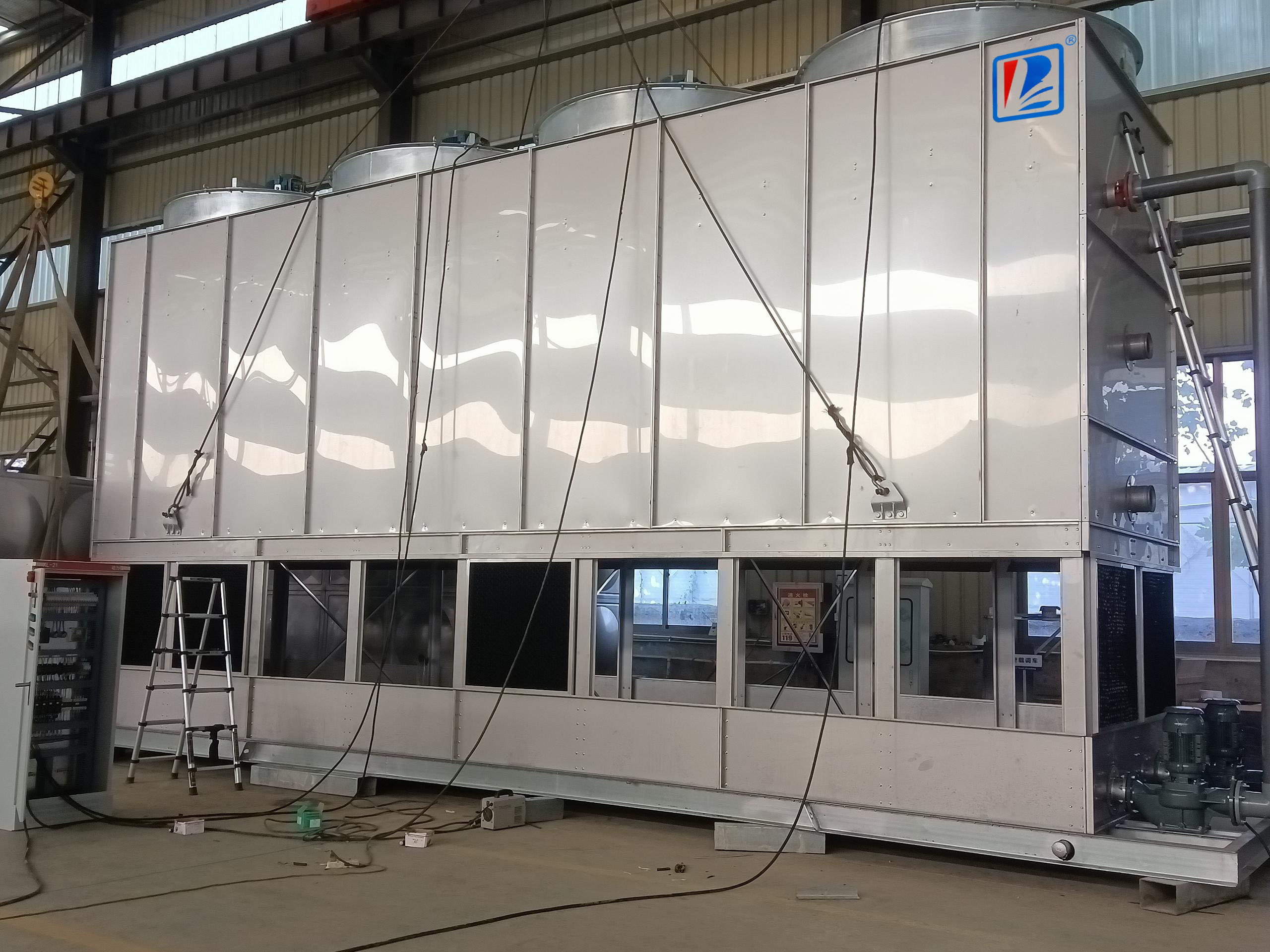
2. Operating Principle Steps
Refrigerant enters the coil
High-temperature, high-pressure gaseous refrigerant flows into the heat exchange coil and needs to release heat to condense into a liquid state.
Spraying water and evaporative cooling
The water pump delivers water from the tank to the spray system, evenly spraying it onto the coil surface to form a water film.
Water absorbs the heat from the refrigerant in the coil, and part of it evaporates (utilizing the latent heat of vaporization of water, significantly improving heat dissipation efficiency).
Airflow enhances heat dissipation
The fan draws in outside air, which flows over the wet coil surface, accelerating water evaporation and carrying away heat.
Moist hot air is expelled by the fan, maintaining continuous airflow circulation.
Water circulation and replenishment
Unevaporated water droplets are collected by the water baffle back into the tank for reuse.
The evaporated water is replenished by an automatic water replenishment device to maintain a stable water level. 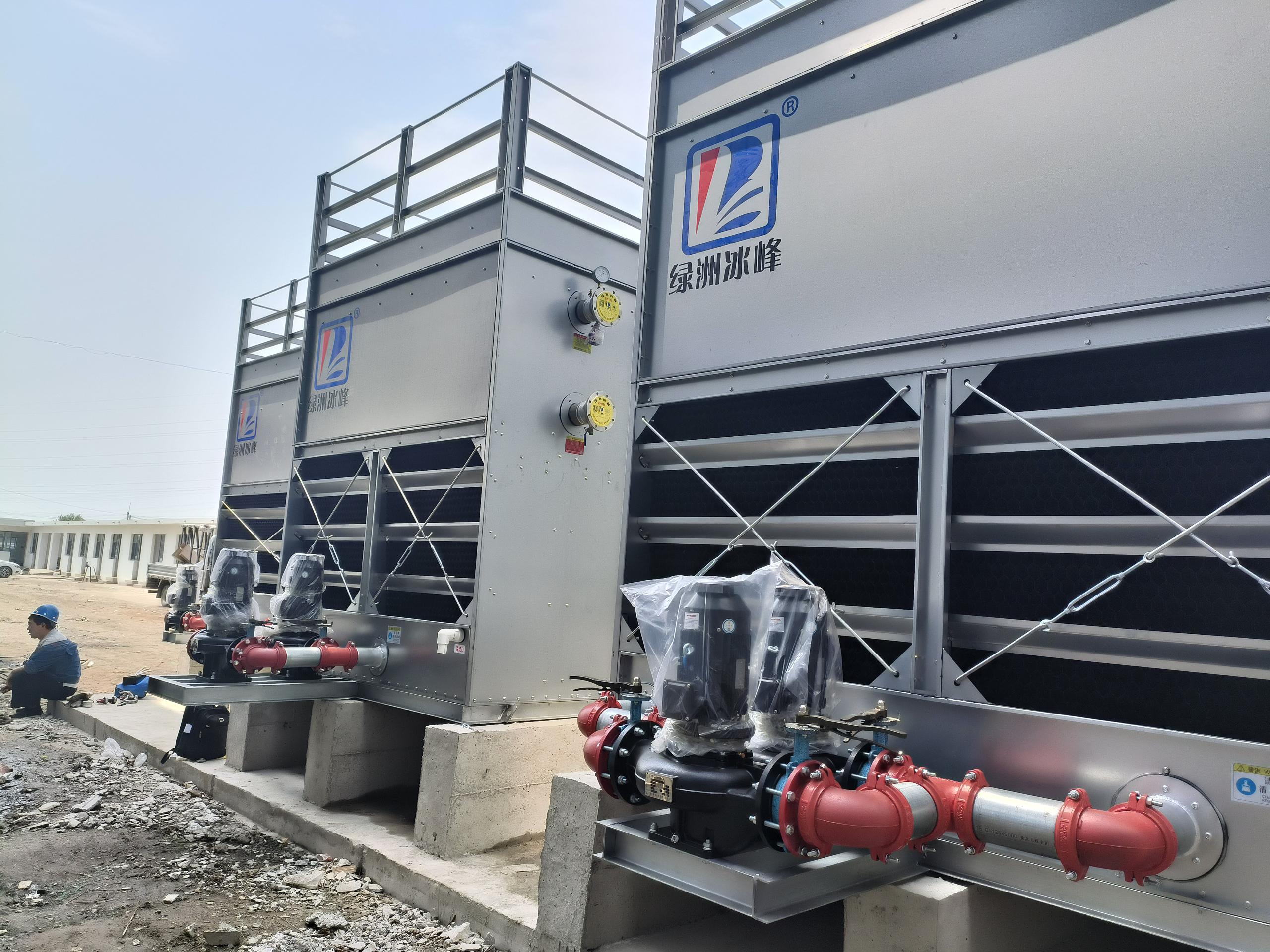
3. Key Advantages
Efficient heat dissipation The latent heat of vaporization of water (approximately 2260 kJ/kg) is far higher than sensible heat exchange, significantly improving cooling efficiency.
Water-saving and environmentally friendly Compared to traditional water-cooling systems, water consumption is reduced by approximately 60%~80%.
Compact structure Eliminates cooling towers and some pipelines, reducing footprint. 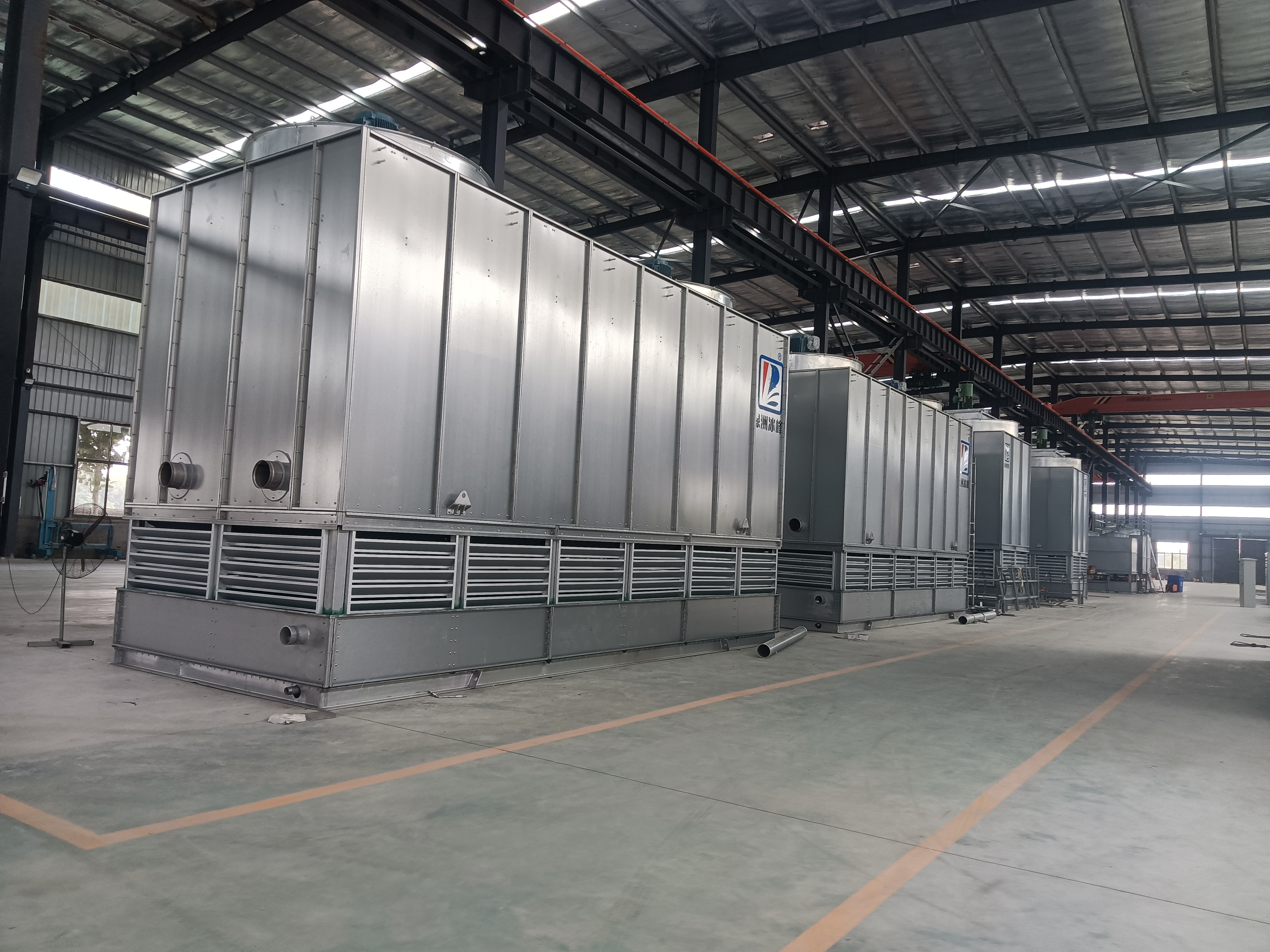
4. Influencing Factors
Ambient humidity Evaporation rate is faster in dry air, resulting in higher efficiency; high humidity may reduce performance.
Water quality management Circulating water needs to be treated regularly to prevent scaling and microbial growth. 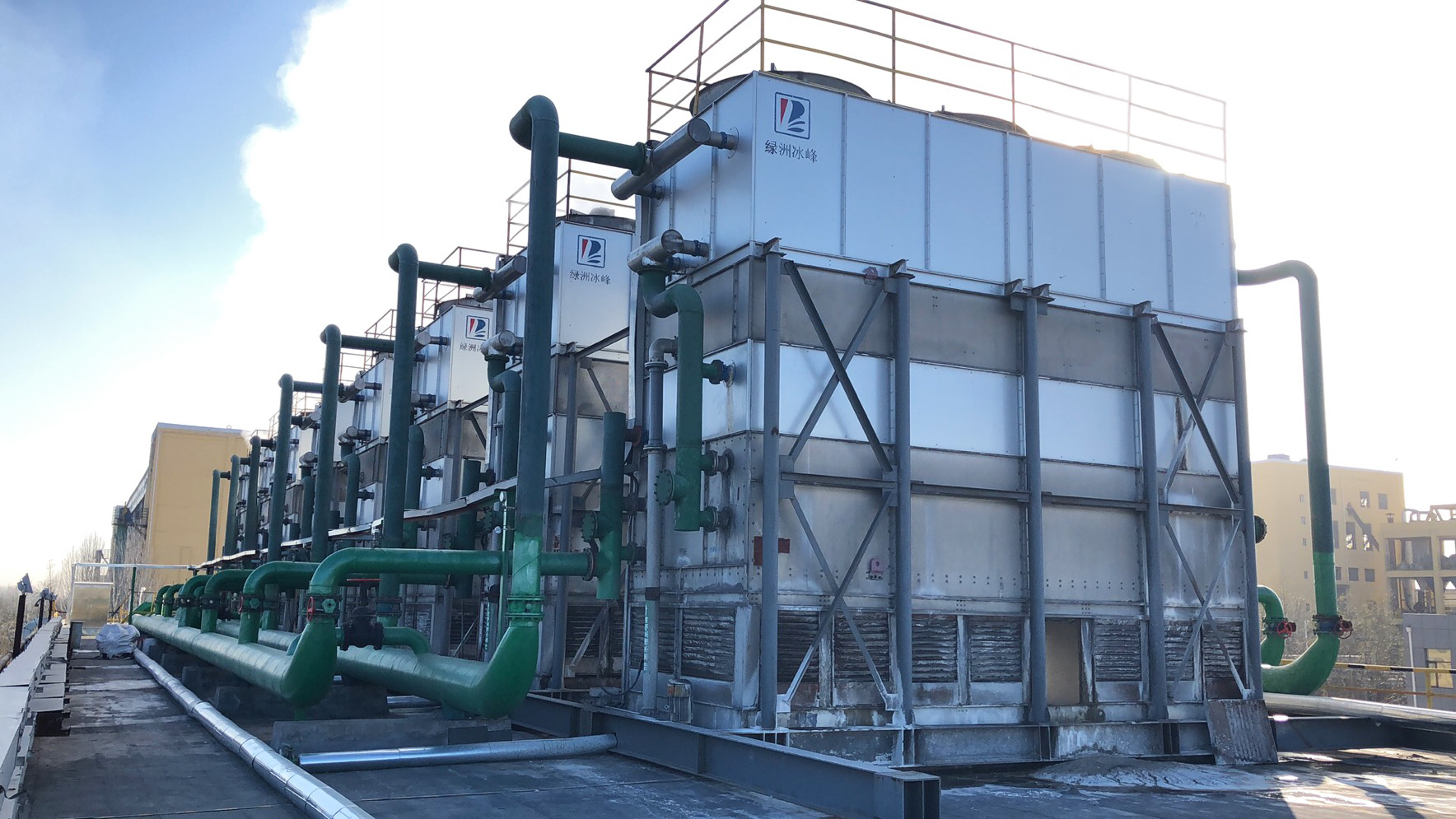
5. Application Scenarios
Widely used in refrigeration systems, industrial cooling, and data centers where efficient heat dissipation is required, especially suitable for areas with water shortages or high water-saving requirements.
By synergistically utilizing water evaporation and forced ventilation, evaporative condensers demonstrate excellent energy efficiency and environmental friendliness, making them an important choice in modern cooling technology.
Closed-circuit cooling tower,Cooling tower,Steel smelting,Closed-circuit cooling tower manufacturer,Closed-circuit cooling tower,Closed-circuit cooling tower,Evaporative condenser,Closed-circuit cooling tower,Petrochemical



Oasis Bingfeng Fluid Equipment Co.,Ltd
Contact Phone:+86 4000 616 676
Fax:+86 0310 3178005
E-mail:sales@hdbingfeng.com
Contact Address:No.1, Happiness Road, Feixiang Economic Development Zone, Handan City, Hebei Province
Copyright©2024 Oasis Bingfeng fluid equipment co., ltd