


NEWS CENTER
Oasis Iceberg
20
2025
-
02
Case study of closed-loop cooling towers in the chemical industry
Applications of Closed-Circuit Cooling Towers in the Chemical Industry
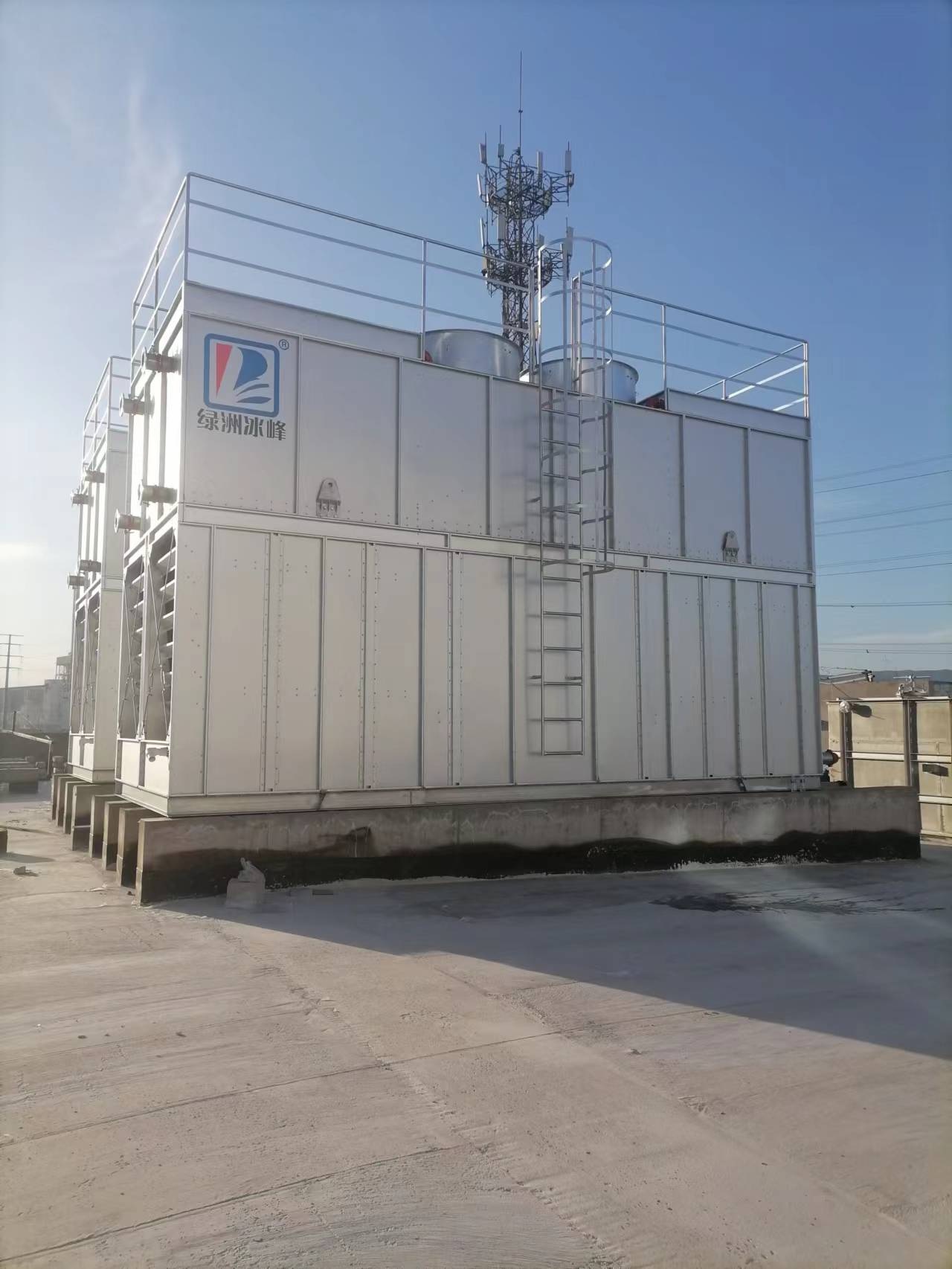
Closed-circuit cooling towers are widely used in the chemical industry, primarily due to their closed-loop circulation, pollution prevention, and water and energy saving characteristics, which meet the stringent requirements of chemical production for temperature control, media protection, and stable environmental protection Here is a specific application scenario and advantage analysis:
1. Cooling of Chemical Reaction Processes
- Application Scenarios :
- Reactor / Reactor Cooling Many exothermic reactions (such as polymerization, nitration, and oxidation) in chemical production require timely removal of heat to avoid temperature runaway, which can lead to excessively fast reaction rates or the formation of byproducts.
- Continuous Flow Reaction System Closed-circuit cooling towers provide a stable source of low-temperature water for the circulating cooling water system, ensuring uniform and controllable temperatures within the reactor.
- Reactor / Reactor Cooling Many exothermic reactions (such as polymerization, nitration, and oxidation) in chemical production require timely removal of heat to avoid temperature runaway, which can lead to excessively fast reaction rates or the formation of byproducts.
- Advantages :
- Avoids direct contact between circulating water and air, preventing contamination of the reaction system by impurities (such as dust and microorganisms).
- Suitable for corrosive cooling media (such as acidic or alkaline process water), protecting equipment lifespan.
- Avoids direct contact between circulating water and air, preventing contamination of the reaction system by impurities (such as dust and microorganisms).
2. Distillation and Condensation Processes
- Application Scenarios :
- Rectifying Column Vapor Condensation In petrochemical and fine chemical industries, closed-circuit cooling towers are used to condense high-temperature vapors (such as methanol, benzene, and other organic solvents) from the top of the rectifying column, achieving reflux control.
- Vacuum System Condensation In vacuum distillation, it provides low-temperature cooling water for vacuum pumps or condensers, improving separation efficiency.
- Rectifying Column Vapor Condensation In petrochemical and fine chemical industries, closed-circuit cooling towers are used to condense high-temperature vapors (such as methanol, benzene, and other organic solvents) from the top of the rectifying column, achieving reflux control.
- Advantages :
- Can handle high-boiling point or flammable and explosive media, avoiding leakage risks caused by media volatilization in open cooling towers.
- Closed-loop circulation reduces water consumption, suitable for areas with water scarcity.
- Can handle high-boiling point or flammable and explosive media, avoiding leakage risks caused by media volatilization in open cooling towers.
3. Chemical Equipment Cooling
- Application Scenarios :
- Compressor, Pump, and Motor Cooling Large compressors or high-speed pumps generate a large amount of heat during operation and require continuous cooling to prevent overheating.
- Lubrication System Cooling Such as cooling the lubricating oil of the stirring shaft of a large reactor.
- Instrument and Meter Temperature Control Precision instruments (such as online analyzers) require a constant temperature environment.
- Compressor, Pump, and Motor Cooling Large compressors or high-speed pumps generate a large amount of heat during operation and require continuous cooling to prevent overheating.
- Advantages :
- The closed system prevents scaling or blockage of equipment internal pipelines by cooling water.
- Suitable for scenarios using antifreeze or special cooling media (such as ethylene glycol solution).
- The closed system prevents scaling or blockage of equipment internal pipelines by cooling water.
4. Waste Heat Recovery and Energy Utilization
- Application Scenarios :
- Process Waste Heat Recovery Transferring waste heat from high-temperature wastewater or waste gas to secondary circulating water through a closed-circuit cooling tower for preheating raw materials or heating.
- Heat Pump System Matching Combined with heat pumps to achieve cascade utilization of low-temperature thermal energy.
- Process Waste Heat Recovery Transferring waste heat from high-temperature wastewater or waste gas to secondary circulating water through a closed-circuit cooling tower for preheating raw materials or heating.
- Advantages :
- Closed-circuit design reduces heat loss and improves energy utilization efficiency.
- Suitable for waste heat recovery of high-temperature and high-pressure media (such as steam condensate).
- Closed-circuit design reduces heat loss and improves energy utilization efficiency.
5. Chemical Raw Material and Product Storage
- Application Scenarios :
- Storage Tank Temperature Control Some chemical raw materials (such as liquid sulfur and styrene) need to be stored at low temperatures to prevent polymerization or decomposition.
- Low-Temperature Warehouse Cooling When storing flammable chemicals (such as peroxides), closed-circuit cooling towers provide an explosion-proof low-temperature environment.
- Storage Tank Temperature Control Some chemical raw materials (such as liquid sulfur and styrene) need to be stored at low temperatures to prevent polymerization or decomposition.
- Advantages :
- Avoids external pollutants from entering the storage tank circulation system.
- Precise temperature control ( ±1 ℃ ) ensures material stability.
- Avoids external pollutants from entering the storage tank circulation system.
6. Special Media and Harsh Environments
- Application Scenarios :
- Corrosive Media Cooling Such as cooling acidic gases in hydrochloric acid and sulfuric acid production, using titanium or polymer coils.
- High-Purity Media Cooling Production of electronic chemicals (such as ultrapure water) or pharmaceutical intermediates requires avoiding impurity contamination.
- Explosion-Proof Areas In factories handling flammable and explosive gases (such as hydrogen and ethylene), closed-circuit cooling towers can be designed as explosion-proof.
- Corrosive Media Cooling Such as cooling acidic gases in hydrochloric acid and sulfuric acid production, using titanium or polymer coils.
- Advantages :
- Flexible material selection (stainless steel, copper-nickel alloy, etc.), strong corrosion resistance.
- The fully enclosed structure eliminates leakage risks and complies with explosion-proof and pollution prevention standards in the chemical industry (such as ATEX 、 OSHA ).
- Flexible material selection (stainless steel, copper-nickel alloy, etc.), strong corrosion resistance.
7. Environmental Protection and Water Conservation Needs
- Application Scenarios :
- Wastewater Treatment System Cooling high-temperature wastewater in the chemical wastewater treatment process.
- Circular Economy Projects In zero-emission systems, closed-circuit cooling towers reduce water replenishment and, combined with water treatment technology, achieve water resource recycling.
- Wastewater Treatment System Cooling high-temperature wastewater in the chemical wastewater treatment process.
- Advantages :
- Compared to open towers, the water saving rate is as high as 70% The above reduces wastewater discharge.
- Avoids the volatilization of harmful substances (such as VOCs ), in compliance with environmental regulations.
- Compared to open towers, the water saving rate is as high as 70% The above reduces wastewater discharge.
Summary: Core advantages of closed cooling towers in the chemical industry
- Safe and reliable : Avoids medium pollution and leakage, suitable for hazardous materials handling.
- Energy saving : Water and electricity saving, great potential for waste heat recovery.
- Strong adaptability : Corrosion-resistant, explosion-proof, high-precision temperature control, meeting diverse needs.
- Environmentally compliant : Reduces wastewater discharge and the spread of volatile substances, contributing to green production.
Against the backdrop of the upgrading and transformation of the chemical industry, closed cooling towers have become an important equipment choice for improving process stability, reducing operating costs, and achieving sustainable development.
Closed-circuit cooling tower,Oasis Ice Peak,Chemical Industry,Reactor
Next Page



Oasis Bingfeng Fluid Equipment Co.,Ltd
Contact Phone:+86 4000 616 676
Fax:+86 0310 3178005
E-mail:sales@hdbingfeng.com
Contact Address:No.1, Happiness Road, Feixiang Economic Development Zone, Handan City, Hebei Province
Copyright©2024 Oasis Bingfeng fluid equipment co., ltd