


NEWS CENTER
Oasis Iceberg
12
2024
-
09
To what temperature can a closed-circuit cooling tower reduce the temperature?
To what extent can a closed-circuit cooling tower reduce the temperature? This primarily depends on several factors, including the design of the closed-circuit cooling tower, operating conditions, local climate conditions (such as wet-bulb temperature), initial water temperature, water flow rate, and inlet air velocity.
To what extent can a closed-circuit cooling tower lower the temperature? This depends on several factors, including the design of the cooling tower, operating conditions, local climate conditions (such as wet-bulb temperature), initial water temperature, water flow rate, and inlet air velocity.
Firstly, in terms of design and operating conditions, a closed-circuit cooling tower achieves cooling by exchanging heat between the internal circulating water and the external air. The cooling range will vary depending on the specific design parameters. For example, some closed-circuit cooling towers may be designed for significant cooling, while others may focus on maintaining stable water temperature.

Secondly, local climate conditions are also important factors affecting the cooling effect of a closed-circuit cooling tower. In particular, the wet-bulb temperature directly affects the efficiency of heat exchange between the air and the circulating water. Generally, the lowest temperature a closed-circuit cooling tower can reach is closely related to the local wet-bulb temperature, usually a few degrees higher. For example, in areas with lower wet-bulb temperatures, closed-circuit cooling towers may be able to reach lower temperatures. 
In addition, the initial water temperature, flow rate, and inlet air velocity will also affect the cooling effect of the closed-circuit cooling tower. Generally, the higher the initial water temperature, the greater the cooling range; the greater the water flow rate, the better the cooling effect; and the slower the inlet air velocity, the better the contact and heat exchange between the air and water, thus improving the cooling effect.
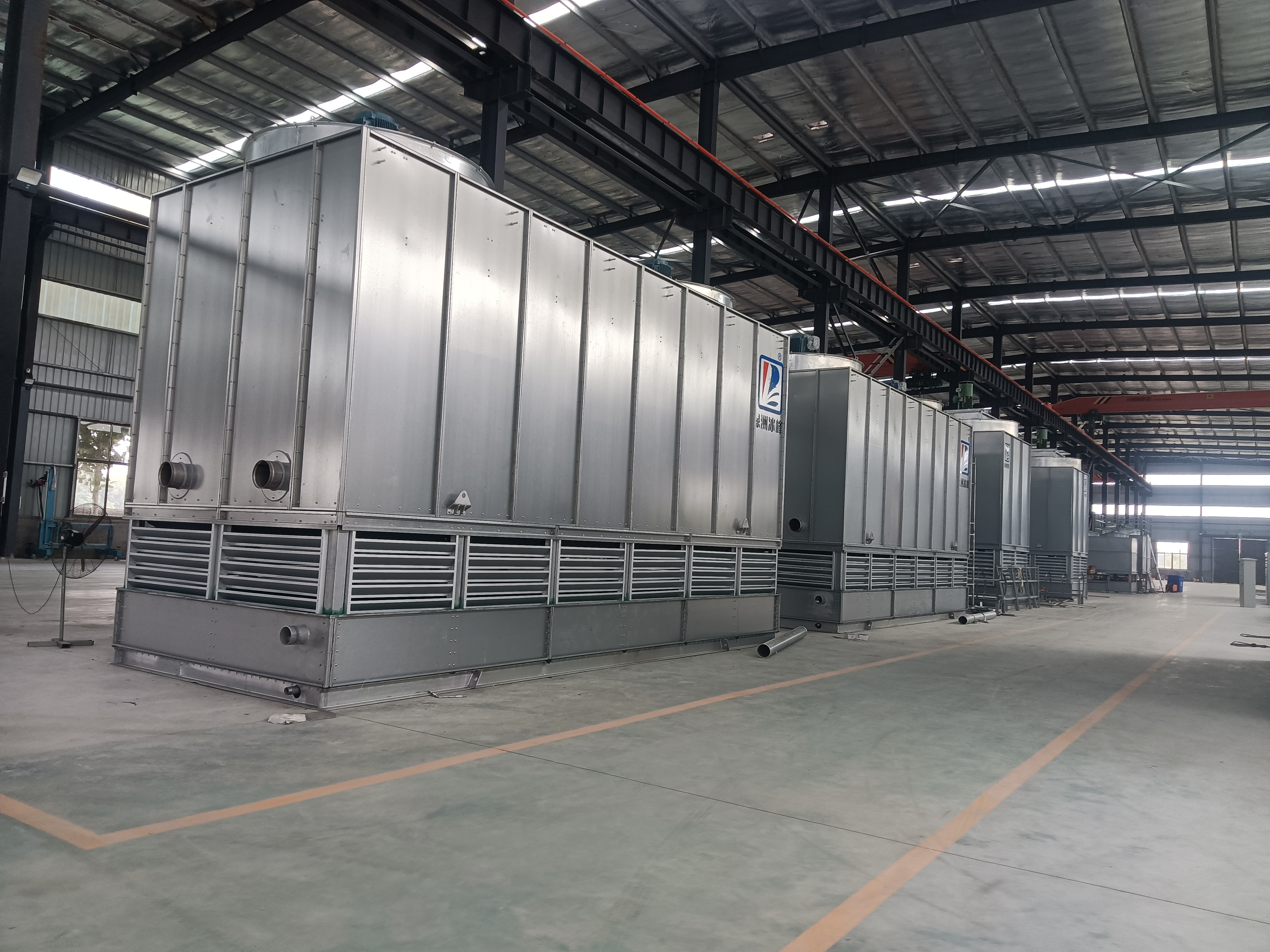
In summary, a closed-circuit cooling tower can generally lower the temperature of the circulating water within a certain range, but the specific cooling range will vary depending on various conditions. Generally, the cooling range of a closed-circuit cooling tower may be between 5-25℃, but the specific value needs to be calculated and determined based on the actual situation.
It is worth noting that other factors need to be considered when operating a closed-circuit cooling tower, such as maintenance costs, energy efficiency ratio, and service life. Therefore, when selecting and using a closed-circuit cooling tower, various factors need to be considered comprehensively to ensure that it meets actual needs and achieves optimal results.
Closed-circuit cooling tower,Evaporative cooling,Closed-circuit cooling tower manufacturers,Closed-circuit cooling tower price,Cooling tower,Cooling tower,Closed-circuit cooling tower,Closed-circuit cooling tower



Oasis Bingfeng Fluid Equipment Co.,Ltd
Contact Phone:+86 4000 616 676
Fax:+86 0310 3178005
E-mail:sales@hdbingfeng.com
Contact Address:No.1, Happiness Road, Feixiang Economic Development Zone, Handan City, Hebei Province
Copyright©2024 Oasis Bingfeng fluid equipment co., ltd