


NEWS CENTER
Oasis Iceberg
13
2024
-
07
Dry-Wet Combined Closed-Circuit Cooling Tower
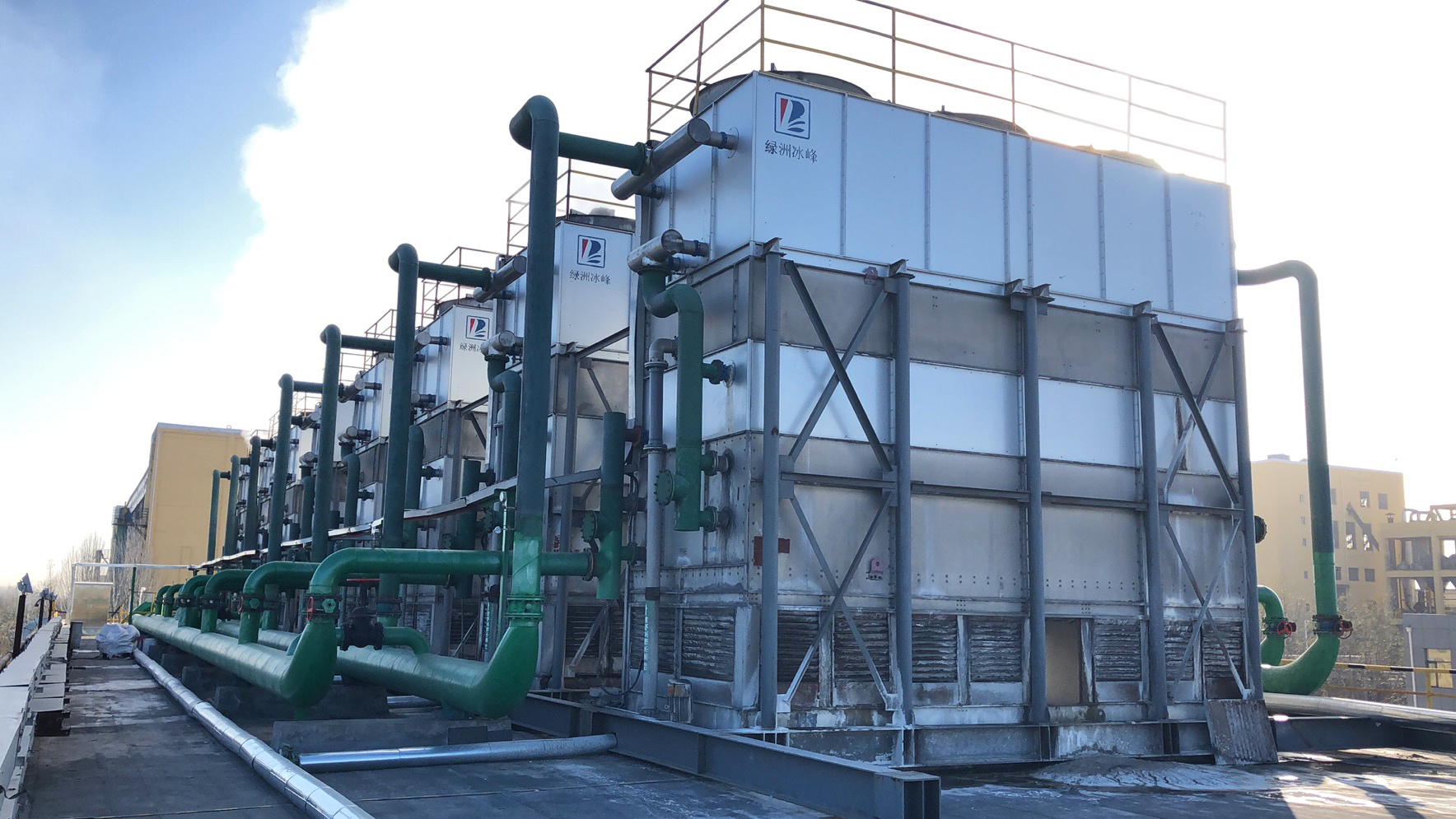
A dry-wet combined closed-circuit cooling tower is a highly efficient and environmentally friendly cooling device that integrates the advantages of both dry and wet cooling towers. It is widely used in industrial sectors such as power generation, chemical engineering, and metallurgy.
A dry-wet combined closed-circuit cooling tower is a highly efficient and environmentally friendly cooling device that integrates the advantages of both dry and wet cooling towers. It is widely used in industrial sectors such as power generation, chemical engineering, and metallurgy.
The working principle is as follows: The circulating water first passes through finned tubes and then flows into the coil. The outer wall of the coil is enveloped by sprayed water, and the heat from the circulating water is transferred to the sprayed water through the coil walls. At the same time, the sprayed water flows in a direction opposite to the incoming air, facilitating heat exchange and producing saturated, humid, and hot air, which is then exhausted by a fan. When the external spray system is turned off, the cooling tower can still dissipate heat via its built-in fin structure, thereby achieving both water conservation and fog suppression.
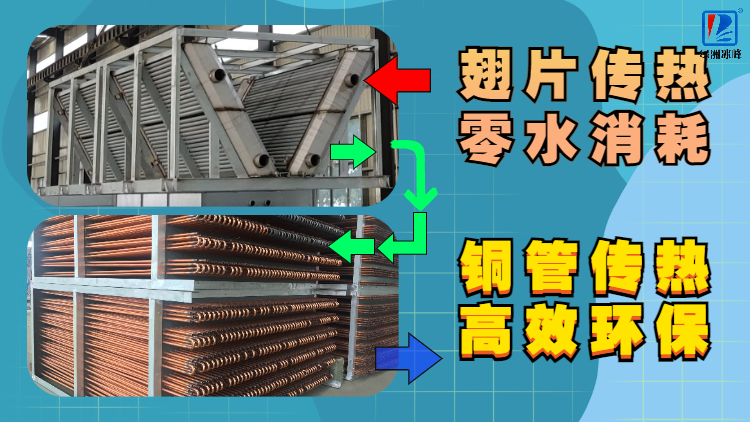
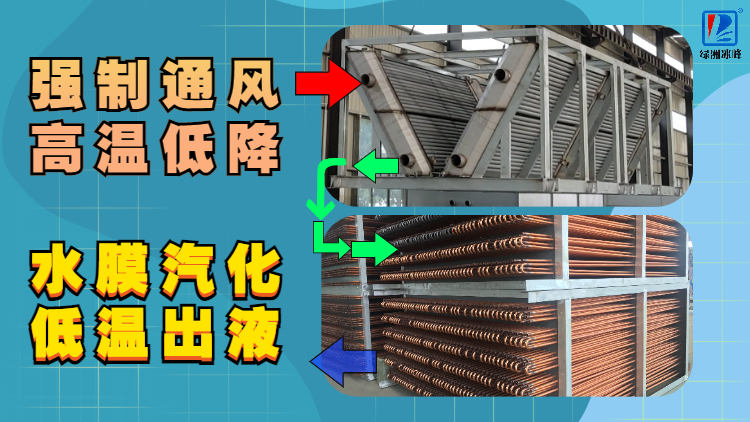
The advantages of this cooling tower include: high cooling efficiency, water resource conservation, reduced operating costs, addressing the issues of ineffective air cooling during summer and high water consumption in evaporative cooling, and striking a balance between water conservation and cooling effectiveness. Moreover, it can perform dry-run cooling even at higher ambient temperatures, achieving high water-saving rates, and features intelligent control for economically efficient operation.
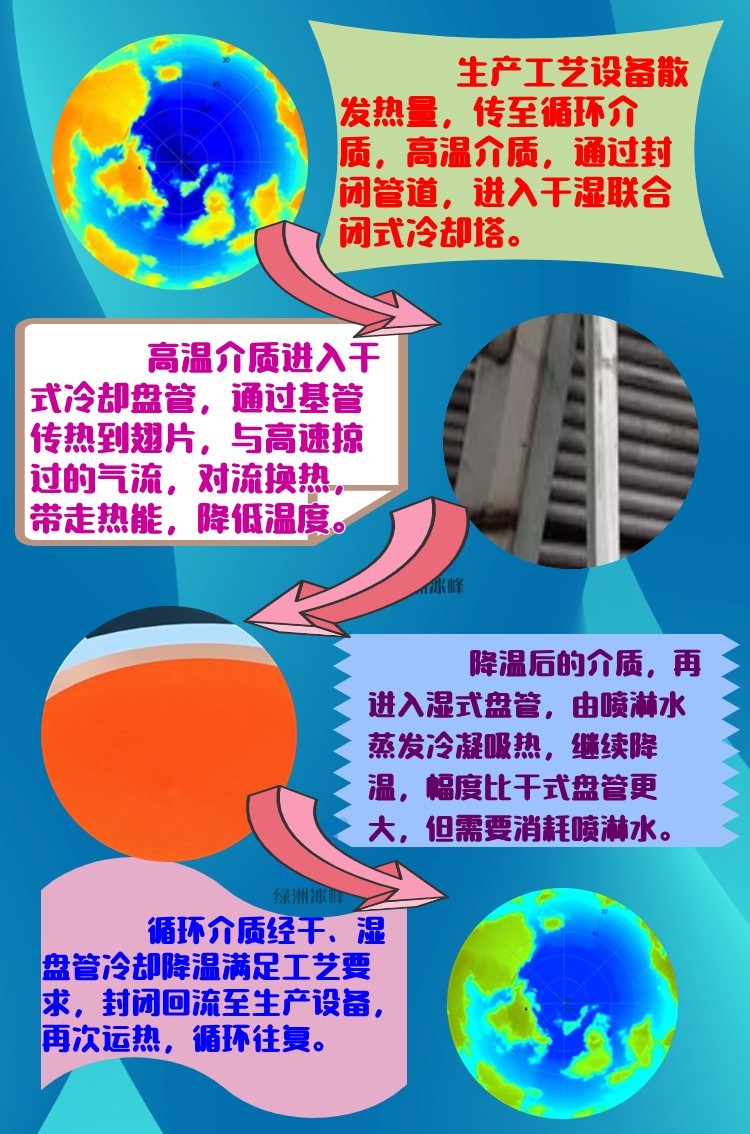
In terms of application scenarios, dry-wet combined closed-circuit cooling towers are particularly well-suited for arid and water-scarce regions, such as the northwest area, helping to reduce water consumption and lower operating costs. At the same time, these cooling towers are also ideal for regions with abundant power resources—such as those powered by wind, hydro, tidal, and nuclear energy—because during dry-mode operation, they require a large volume of air and thus demand relatively high-power fan motors, enabling full utilization of the plentiful electricity available in these areas.
In general, the dry-wet combined closed-circuit cooling tower is a comprehensive system technology that integrates multiple disciplines—including aerodynamics, thermodynamics, fluid mechanics, materials science, static and dynamic structural mechanics, and intelligent control—and holds broad application prospects.



Oasis Bingfeng Fluid Equipment Co.,Ltd
Contact Phone:+86 4000 616 676
Fax:+86 0310 3178005
E-mail:sales@hdbingfeng.com
Contact Address:No.1, Happiness Road, Feixiang Economic Development Zone, Handan City, Hebei Province
Copyright©2024 Oasis Bingfeng fluid equipment co., ltd