


NEWS CENTER
Oasis Iceberg
10
2024
-
10
How does ambient temperature in different regions affect closed-circuit cooling towers?
The impact of ambient temperature in different regions on closed-circuit cooling towers is mainly reflected in cooling efficiency, energy consumption, and design selection. A detailed analysis of these impacts is as follows:
The impact of ambient temperature in different regions on closed-circuit cooling towers is mainly reflected in cooling efficiency, energy consumption, and design selection. A detailed analysis of these impacts is provided below:
I. Cooling Efficiency
Temperature Differences: Ambient temperatures vary significantly across different regions. In China, winter temperatures in northern regions can drop as low as -30°C, while southern regions may experience consistently warm and humid conditions. This temperature difference directly affects the cooling efficiency of closed-circuit cooling towers.
Northern Regions: At extremely low temperatures, air can absorb more heat, so the cooling efficiency of closed-circuit cooling towers is relatively high. Cold air, when flowing through the cooling coils, can more effectively remove heat, thereby lowering the temperature of the circulating water.
Southern Regions: Relatively warm temperatures reduce the air's ability to absorb heat, resulting in relatively low cooling efficiency. In high-temperature, high-humidity environments, cooling towers also need to consider dehumidification to further improve cooling performance.
Heat Exchange Efficiency: Ambient temperature also affects the heat exchange efficiency within the cooling tower. In low-temperature environments, the heat exchange process is smoother, the temperature difference between the cooling medium and the cold air is large, and the heat transfer rate is fast. In high-temperature environments, however, heat exchange efficiency may be limited. 制。
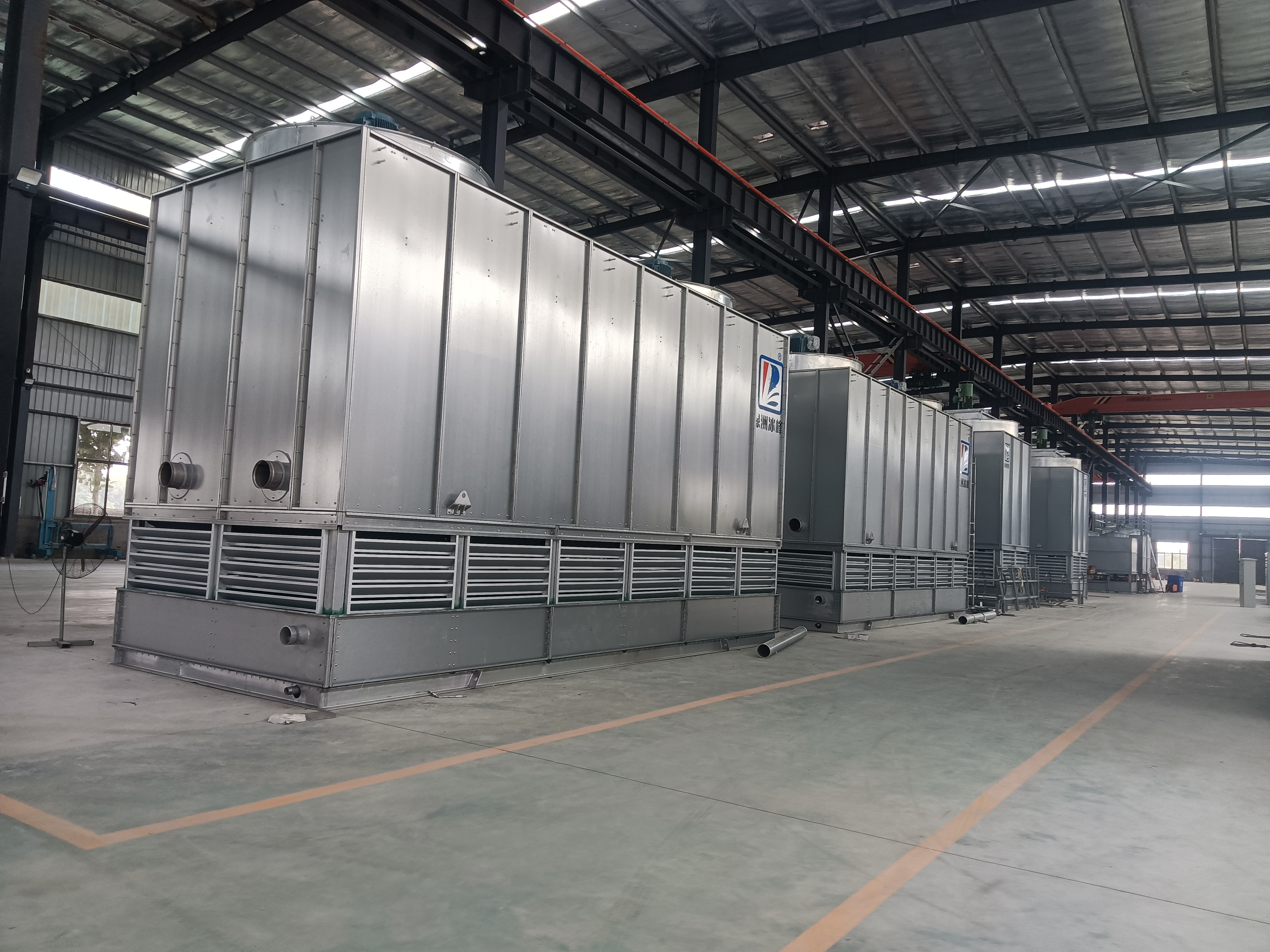
II. Energy Consumption
Fan Energy Consumption : Closed-circuit cooling towers are usually equipped with fans to promote air flow and improve cooling efficiency. Due to differences in ambient temperature in different regions, fan energy consumption will also vary.
Low-Temperature Environments : In low-temperature environments, fans may not need to operate at maximum power to achieve good cooling results, thus reducing energy consumption.
High-Temperature Environments : In high-temperature environments, to maintain cooling efficiency, fans may need to operate at higher power, leading to increased energy consumption.
Circulating Water Pump Energy Consumption : The energy consumption of the circulating water pump is also affected by the ambient temperature. In low-temperature environments, the temperature of the circulating water is lower, and less energy may be needed to maintain its circulation. In high-temperature environments, however, to maintain cooling efficiency, the circulating water pump may need to increase power to increase the circulating water volume. 维持其循环。而在高温环境下,为了保持冷却效果,循环水泵可能需要增加功率以提高循环水量。
III. Design Selection
Cooling Capacity Design : When designing and selecting closed-circuit cooling towers, the local ambient temperature conditions must be fully considered. Differences in ambient temperature in different regions require cooling towers to have different cooling capacities.
Northern Regions : In northern regions, due to extremely low winter temperatures, cooling towers with higher cooling capacity should be selected to ensure normal operation of equipment in extreme weather.
Southern Regions : In southern regions, while excessively high cooling capacity is not required, dehumidification and corrosion prevention must be considered in high-temperature, high-humidity environments.
Material Selection : Ambient temperature in different regions may also affect the material selection of cooling towers. In low-temperature environments, materials with good cold resistance should be selected to prevent cracking; in high-temperature, high-humidity environments, materials with good corrosion resistance should be selected to prevent corrosion.
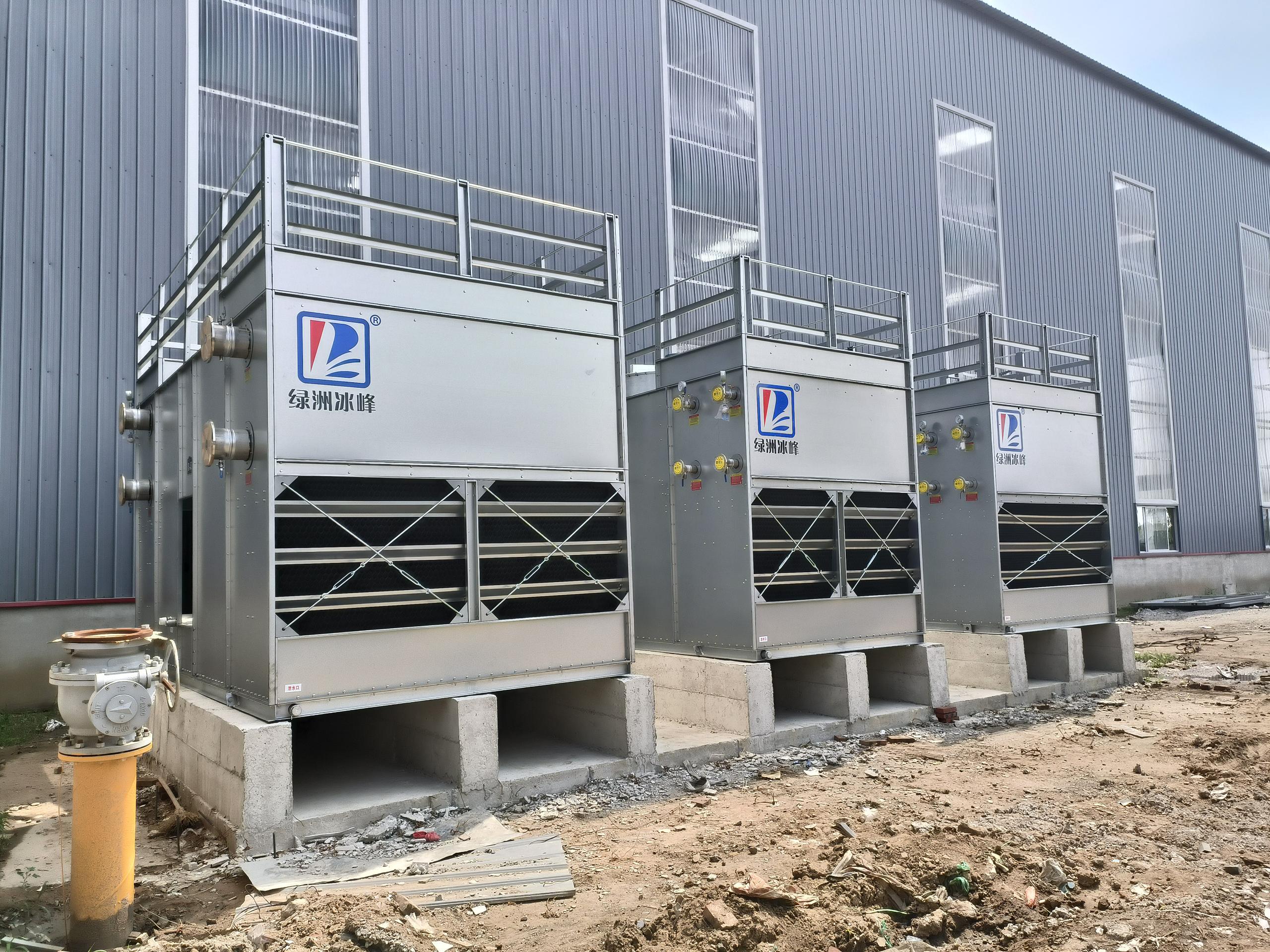
In summary, the impact of ambient temperature in different regions on closed-circuit cooling towers is multifaceted, including cooling efficiency, energy consumption, and design selection. Therefore, when selecting and using closed-circuit cooling towers, local ambient temperature conditions must be fully considered to ensure efficient and stable operation.
Closed-circuit cooling tower,Evaporative cooling,Cooling tower,Cooling tower,Wet and dry cooling tower,Closed-circuit cooling tower manufacturers,Cooling tower manufacturer
Previous Page



Oasis Bingfeng Fluid Equipment Co.,Ltd
Contact Phone:+86 4000 616 676
Fax:+86 0310 3178005
E-mail:sales@hdbingfeng.com
Contact Address:No.1, Happiness Road, Feixiang Economic Development Zone, Handan City, Hebei Province
Copyright©2024 Oasis Bingfeng fluid equipment co., ltd