


NEWS CENTER
Oasis Iceberg
13
2024
-
08
What is an evaporative condenser?
An evaporative condenser (also known as an evaporative cooler) is an energy-efficient cooling device that integrates water cooling and air cooling, as well as heat transfer and mass transfer processes, while leveraging the advantages of both.
An evaporative condenser (also known as an evaporative cooler) is an energy-efficient cooling device that integrates water cooling and air cooling, as well as heat transfer and mass transfer processes, while leveraging the advantages of both.
I. Working Principle
The working principle of evaporative cooling is to pass high-temperature, high-pressure refrigerant vapor—whose condensation is required—through a condenser tube bundle. Water is sprayed onto the outside of the tubes, and forced ventilation is used to cause the water film on the tube surface to evaporate. The heat is transferred from the refrigerant vapor inside the tubes to the water film outside the tubes, where it then evaporates and dissipates into the atmosphere.
II. Components
An evaporative cooler mainly consists of components such as a tube bundle, a spray system, water baffles, an axial-flow fan, a collection tank, a pump, and a cabinet. It operates by utilizing the heat absorbed during water evaporation to condense refrigerant vapor inside the tubes into liquid. Evaporative coolers consume very little water—only about one-fifth to one-tenth of the water consumption of conventional water-cooled condensers under the same operating conditions—and their operating costs are also only about one-fourth to one-fifth of those for typical water-cooled condensers.

III. Characteristics of Evaporative Cooling
High efficiency and energy saving: An evaporative condenser removes heat by utilizing the latent heat of vaporization of water, bringing the condensing temperature close to the designed wet-bulb temperature. This reduces the power consumption of the compressor and improves the overall energy efficiency of the system.
By adopting an efficient water circulation system and water-saving designs—such as polyvinyl chloride water-blocking and dewatering materials and components—water consumption can be effectively controlled, resulting in significantly higher water-saving performance compared to conventional cooling systems.
Small footprint, easy to operate: Evaporative condensers have a compact structure and relatively small footprint, enabling them to deliver greater heat-transfer capacity within limited spaces and reducing installation costs.
Moreover, by adopting an automated control system, functions such as automatic start-up and shutdown, as well as automatic adjustment, can be realized, thereby reducing the workload associated with manual operation and maintenance.
Environmentally friendly and pollution-free, easy to maintain: Evaporative condensers generate very little noise and minimal emissions of pollutants during operation, meeting environmental protection requirements and having no adverse impact on the surrounding environment.
The structural design is reasonable, facilitating daily maintenance and inspections, thereby reducing downtime and maintenance costs.
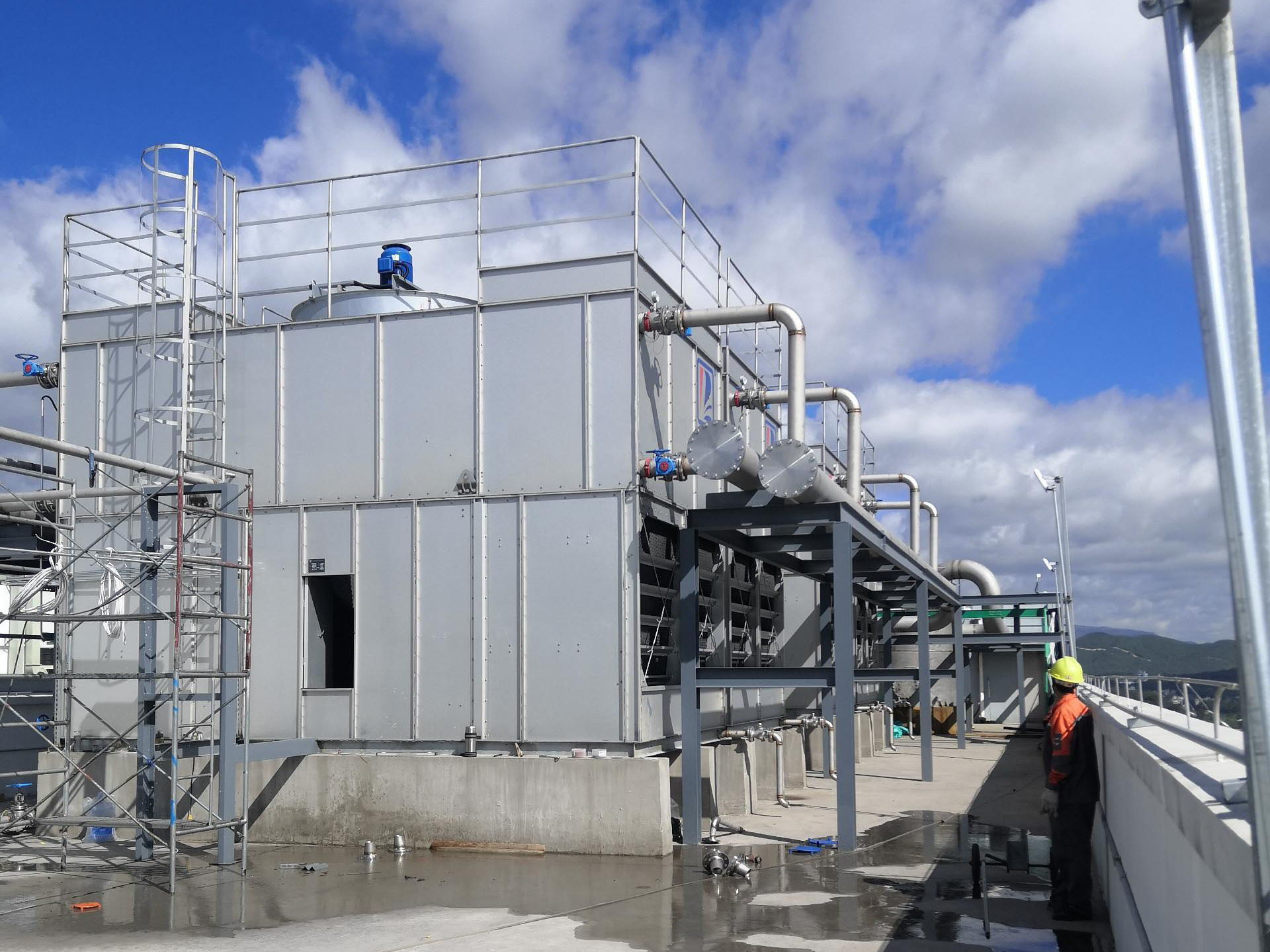
Closed-circuit cooling tower,Evaporative cooling,Closed-circuit cooling tower manufacturer,Closed-circuit cooling tower price,Closed-circuit cooling tower,Closed-circuit cooling tower,Closed-circuit cooling tower



Oasis Bingfeng Fluid Equipment Co.,Ltd
Contact Phone:+86 4000 616 676
Fax:+86 0310 3178005
E-mail:sales@hdbingfeng.com
Contact Address:No.1, Happiness Road, Feixiang Economic Development Zone, Handan City, Hebei Province
Copyright©2024 Oasis Bingfeng fluid equipment co., ltd