


NEWS CENTER
Oasis Iceberg
13
2024
-
07
The Influence of Ambient Temperature on the Cooling Performance of Closed-Circuit Cooling Towers
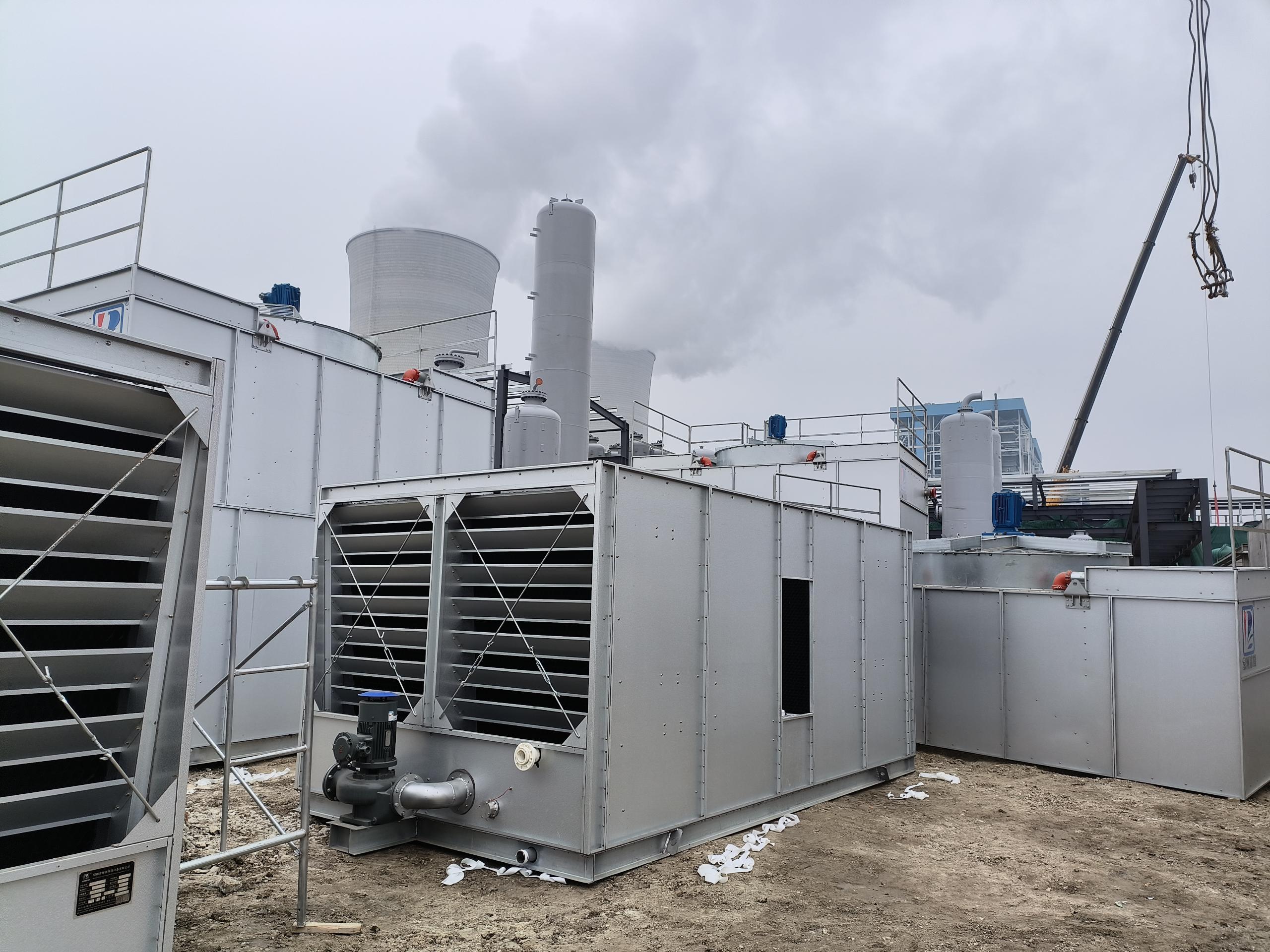
When selecting and designing closed-circuit cooling towers, factors such as the local wet-bulb temperature and ambient temperature are taken into account.
When selecting and designing closed‑circuit cooling towers, engineers typically take into account local meteorological conditions such as the wet‑bulb temperature and ambient air temperature. These factors can significantly influence the cooling performance of the tower. Given the substantial temperature differences between southern and northern China, the cooling capacity of the tower is tailored to the specific environmental conditions of each region during the design phase.
For example, in northern China, winter temperatures can drop as low as −30°C. Naturally, the lower the ambient temperature, the higher the cooling efficiency of a closed‑circuit cooling tower. Typically, the cooling medium flowing through the cooling coils maintains a constant temperature, as it is matched to the process‑specific operating temperature. As the fluid passes through the coils, heat is transferred to the cool air, which then absorbs the heat and is carried away by the fan. Of course, air at −30°C and air at 0°C will transfer different amounts of heat. The colder the air, the more heat it can absorb, resulting in faster cooling performance and reduced energy consumption for the closed‑circuit cooling tower.
When designing a closed‑circuit cooling tower, the spray system is typically activated automatically in response to temperature changes. This accounts for fluctuations in ambient temperature. At higher temperatures, when air‑side heat exchange alone cannot meet the required cooling capacity, the spray system is automatically engaged to provide supplemental cooling; as the water evaporates, it absorbs heat and lowers the temperature. Conversely, when ambient temperatures are low, the spray system can remain off while still achieving full cooling, thereby reducing the cooling tower’s energy consumption to some extent.
When the ambient temperature is relatively low, natural cooling through a continuous coil may suffice. In designing for such ambient conditions, the target cooling temperature is typically close to, or slightly above, the local wet-bulb temperature. Given that temperatures in southern China are generally high, cooling tower designs often incorporate a marginally higher cooling capacity to ensure both efficiency and adequate performance.
Why choose the Oasis Ice Peak closed-circuit cooling tower?
Original manufacturer
Oasis Ice Peak is an original equipment manufacturer that integrates the research, production, sales, and service of closed-circuit cooling towers.
With 20 years of manufacturing experience.
For the past 20 years, we have been dedicated to the research and development of cooling equipment, capable of manufacturing a wide range of models and specifications tailored for diverse applications. Our products boast mature manufacturing technology, reliable quality, and outstanding performance.
There are 16 national patent technologies.
To date, Oasis Ice Peak has obtained 16 patents for closed‑circuit cooling towers. Its products are not only highly efficient and reliable but also energy‑saving, environmentally friendly, and long‑lasting.
A robust after-sales service system
Oasis Ice Peak boasts a comprehensive after-sales service system. When users encounter issues, we promptly identify the relevant processes and responsible parties, and resolve their problems without delay.



Oasis Bingfeng Fluid Equipment Co.,Ltd
Contact Phone:+86 4000 616 676
Fax:+86 0310 3178005
E-mail:sales@hdbingfeng.com
Contact Address:No.1, Happiness Road, Feixiang Economic Development Zone, Handan City, Hebei Province
Copyright©2024 Oasis Bingfeng fluid equipment co., ltd