


NEWS CENTER
Oasis Iceberg
13
2024
-
07
Assembly Process of a Closed-Circuit Cooling Tower
From design to commissioning, a closed-circuit cooling tower must undergo multiple stages to ensure it performs as intended and delivers maximum efficiency.
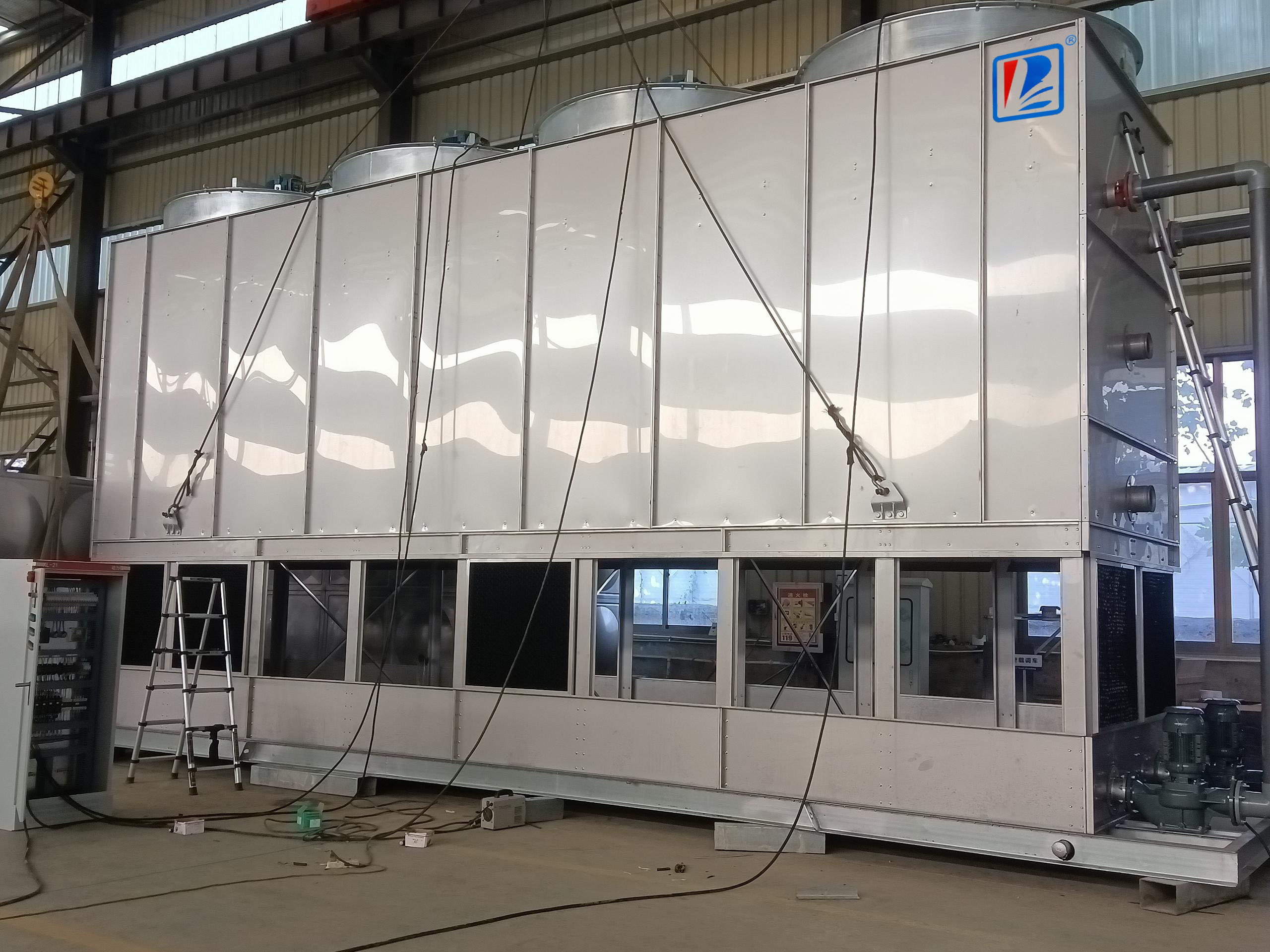
From design to commissioning, a closed‑circuit cooling tower must undergo multiple stages to ensure it performs as intended and delivers optimal efficiency. The process begins with design and preparatory work, followed by meticulous assembly, which includes erecting the tower structure, installing the spray system, mounting the circulation pump, setting up the water tank and water‑treatment equipment, connecting piping and fittings such as valves, and conducting pressure testing and no‑load commissioning, among other steps.
During assembly, operations must strictly follow the instructions or drawings, with due attention to safety precautions, and ensure that all components and equipment comply with applicable standards and regulations. Testing and commissioning are critical steps to guarantee the proper operation of a closed‑circuit cooling tower. With correct assembly and commissioning, the cooling tower can deliver efficient heat exchange and cooling performance, meeting the requirements of industrial production.

I. Design and Preparation
During the design and preparation phases, it is essential to consider the closed‑circuit cooling tower’s specifications, performance, and functional requirements. Typically, this involves using specialized software for detailed design and calculations, selecting appropriate materials and components, accounting for site‑specific operating conditions, maximizing efficiency, ensuring adequate power output, and extending service life. To ensure smooth assembly, all necessary tools and equipment must also be prepared.
II. Assembly of the Tower Structure
The tower body is the core component of a closed‑circuit cooling tower, comprising heat‑exchange coils, an internal frame, equipment enclosures, packing and nozzle systems, and a fan system. Typically, the steel framework is divided into several modules, each containing multiple bolts and connectors; fasteners in critical areas are made of 304 stainless steel to prevent rust over long periods, thereby extending service life and ensuring smooth maintenance. During assembly, the modules should be installed one by one and securely tightened to ensure the tower’s structural integrity and stability.

III. Installation of the Sprinkler System
The spray system is designed to evenly distribute spray water over the heat‑exchanger coils. Typically, the nozzle assembly comprises a spray pump, piping, and nozzles. Selecting the spray pump is the cornerstone of the design; first, it must meet the required flow rate, which is a key consideration in both software calculations and coil design—ensuring adequate evaporation while avoiding excessive water‑film thickness that would increase wall thermal resistance. Second, while overcoming system pressure losses and maintaining adequate nozzle pressure, the head should be minimized to reduce operating energy consumption. Finally, attention should be paid to details such as nozzle geometry, nozzle‑to‑pipe connections, and the smoothness of the internal pipe surface, all with user‑oriented considerations in mind, including ease of maintenance, service life, and energy efficiency.
IV. Installation of the Circulation Pump
The circulation pump serves as the power source that drives the internal water flow, providing the necessary impetus for cooling and temperature reduction within the system. Its fundamental parameters are flow rate and head; operating energy consumption is reflected in power, which is a key indicator of energy efficiency. During the design phase, Oasis Bingfeng conducts detailed calculations based on the user’s on-site piping layout, system elevation differences, pressure losses in the closed‑type cooling tower, and internal resistance losses of production‑heat‑generating equipment, while also accounting for local resistance losses at various fittings. If a fully closed system is employed, elevation differences and outlet pressure losses can be disregarded, thereby reducing the required pump head. Taking these factors into account, combined with Oasis Bingfeng’s 20 years of experience in pump manufacturing, an appropriate pump type, specifications, and brand are selected. Typically, a vertical pipeline circulation pump—comprising an electric motor, pump housing, impeller, and sealing components—is chosen; horizontal pipeline pumps may also be used, though they are generally designed for clean water applications. During installation, careful attention must be paid to the connections and sealing between the pump and piping, as well as to the motor’s wiring and commissioning procedures.
V. Installation of Water Tanks and Water Treatment Equipment
Water tanks and water treatment equipment are used to store and treat cooling water. When installing a water tank, it is necessary to first determine its capacity and location, then select appropriate materials and specifications. When installing water treatment equipment, one must first define the required water quality standards, followed by choosing the suitable equipment type and specifications.
VI. Installation of Piping and Valves
Pipes and valves are critical components for controlling the flow rate and temperature of cooling water. When installing pipes and valves, it is essential to select appropriate materials and specifications and to adhere to the design requirements. Typically, these include inlet pipes, outlet pipes, control valves, flow meters, pressure gauges, temperature sensors, and more. During installation, particular attention should be paid to the connections and sealing of pipes and valves, as well as to the operation and adjustment of the valves.

VII. Perform testing and debugging
Testing and commissioning are critical steps to ensure the proper operation of a closed‑circuit cooling tower. Prior to testing, it is essential to verify that all components and equipment have been correctly installed and to conduct tests in accordance with the equipment’s operating manual. The testing process typically involves evaluating parameters such as water pressure, mechanical performance, electrical performance, water flow rate, temperature, and pressure. During testing, adjustments and corrective measures should be made in line with the design specifications to ensure that the closed‑circuit cooling tower meets its intended performance targets.
The above is the assembly procedure for a closed-circuit cooling tower. During assembly, special attention must be paid to safety considerations, and it must be ensured that all components and equipment comply with the relevant standards and regulations.
Previous Page



Oasis Bingfeng Fluid Equipment Co.,Ltd
Contact Phone:+86 4000 616 676
Fax:+86 0310 3178005
E-mail:sales@hdbingfeng.com
Contact Address:No.1, Happiness Road, Feixiang Economic Development Zone, Handan City, Hebei Province
Copyright©2024 Oasis Bingfeng fluid equipment co., ltd